
Welcome! Are you new at school? Nau mai haere mai! He hou koe ki te kura?
Useful Information for Parents & Guardians
School Hours

7:45 am to 2:45 pm - Office hours
8:25 am - Start of School
10:25 am to 10:55 am - Morning Tea
12:25 pm to 1:15 pm - Lunch Break
2:20 pm - School Finishes
Children will be supervised from 7.50 am onwards; we do not accept responsibility for children who arrive earlier at school. All children should be at school ready to learn by 8.15 am.

Attendance - Absences/Lateness
All students are expected to attend school every day unless they are unwell or there is a family emergency. The school is required by law to ensure student attendance. If a child is absent or late, a note or telephone call is required from the parent or caregiver. An early phone call, text or email is appreciated or sending a note with a sibling. You can also send us a message through our website.
The Ministry of Education Attendance Service will be contacted to assist the Board when there are cases of poor attendance or regular lateness.
Children should be at school and ready to start class by 8:25 am when the bell rings. Children are able to be dropped off at school from 7:50 am.
Clothing
We don't have a school uniform, although we expect children to be dressed appropriately for the weather conditions and for the activities in which they will be involved. Clothing must be clean and tidy. Children will be asked to wear the school sports uniform when representing our school. In Terms 1 and 4, a swimming costume and towel are essential requirements as swimming is an integral part of our Physical Education programme.
Sun hats are compulsory in Terms 1 and 4, these are on sale at the office at $17.00. We encourage appropriate dress, such as shorts and tee shirts for Physical Education.
Please ensure that all clothing is the correct size for the child and preserves modesty.
No inappropriate slogans on hats, bags or clothes, please.
Jewellery and other ornamentation, with the exception of small ear studs and watches, is not permitted. If families wish their children to wear other items for religious or cultural reasons, a note to this effect is required and, for safety reasons, the items (e.g. pendants, crucifixes) should be worn under their outer clothing wherever possible and a letter must be written with a waiver.

Assemblies & Powhiri (Welcome Ceremonies)
School assemblies are held throughout the term; dates and times for assemblies will be communicated via our newsletter and Facebook page. Family/Whanau members are always welcome to attend.
Powhiri/Mihi whakatau (Welcome Ceremonies)
At the beginning of term 1, there is a formal powhiri ceremony to welcome new students and their families, as well as new staff members. Invitations will be sent to the families of new students. Throughout the year, we welcome all new students with a mihi whakatau held in classrooms, where there is an opportunity for male representatives of the new students to speak if they wish.
Powhiri format: Our welcome ceremony follows the Tikanga of Patuharekeke, our local iwi.


School Stationery
Stationery can be purchased online from Office Max.
We appreciate all students ready to start school at the beginning of the year with all of their stationery requirements.
Compulsory swim caps can be purchased for $5.00 from the school office.
Stationery lists are available online only at Office Max.
Reporting to Parents
Our reporting processes aim to align with the Principles for Effective Reporting outlined by the Ministry of Education. More information can be found here.
Our reporting processes are as follows:
Term 1:
Seesaw portfolio, which will include progress against the New Zealand Curriculum in reading, writing, maths, progress against student goals, and an example of discovery learning (depending on the curriculum focus for the term, science, technology, Health, Social Studies)
Term 2:
3 Way Conferences followed by a written summary of achievement in relation to the New Zealand Curriculum, together with student goals.
Seesaw portfolio, which will include progress against the New Zealand Curriculum in reading, writing, maths, progress against student goals, and an example of discovery learning (depending on the curriculum focus for the term, science, technology, Health, Social Studies)
Term 3:
Regular updates on classroom learning through Seesaw for Schools (depending on the curriculum focus for the term, science, technology, Health, Social Studies)
Term 4:
End of year summary report

Visitors to the School
All visitors to the school, including parents and caregivers, are asked to come to the office. Firstly, for safety reasons, we need to know who is on our school grounds at all times, and secondly, we aim to reduce classroom interruptions to a minimum.
Parents In School
Research indicates that parental involvement is a key factor in successful schools. Parental involvement has a positive influence on children’s progress and development. Many parents are happy to act as regular helpers at school, helping out in classrooms, in the library or on the lunch roster to give a few examples. However, others are unable to assist the school in this way due to work commitments and their support is offered in other areas such as the Board of Trustees, the PTA Committee or in fundraising activities.
In order to comply with the Privacy Act legislation, the school asks parents and caregivers who are happy to assist in classrooms to sign a code of conduct agreement. This may seem overly formal, but it is not intended to be. It serves a two-fold purpose:
- Our school families will have the confidence of knowing that their children are supported by helpers who are fully aware of their responsibilities.
- Parent helpers will be protected from the possibility of unpleasant repercussions should a problem arise in the classroom.
Code of Conduct for Parent Helpers:
Respect the integrity of the staff, students, trustees and parents.
- Work cooperatively with the staff and trustees.
- Anything that is discussed, overheard and seen relating to children and staff is to be kept confidential and not discussed outside the classroom or school, including through social media
- Perform only the duties requested by the teacher.
- Leave matters of student discipline to the classroom teacher.
- Be in the classroom only when the teacher is present
- Always have the teacher present or nearby when working with a group of children.
- Support the authority of the teacher.
- Abide by statutory obligations, school policies and by-laws. If in doubt, check with the teacher.
- If you have any concerns over things you have observed and heard while at One Tree Point School, then please follow them up through the appropriate lines of communication - teacher first, Deputy Principal if the concern remains and lastly Principal.


Child Safety

Sun Safety
We do our best to ensure that children and staff are, wherever possible, protected from skin damage caused by the harmful ultraviolet rays of the sun, which can lead to skin cancer.
-
Programmes of sun safety are incorporated into the health curriculum.
-
Children and staff must wear sun hats when outside at playtimes and lunchtimes in the summer terms (Terms 1 and 4).
-
Children without sun hats must stay in the shaded areas within the school.
- The Board will maintain a planting programme to ensure that there is adequate shade available within the school premises.
- The use of sunscreen is encouraged and we encourage you to sunscreen your child before they come to school.
- The school provides hats for sale at $17 for each child to wear at school.
Cycling or Scootering to School
The responsibility for the safety of children when riding to and from school belongs exclusively to the parents and not the school. The NZ Police, Bike Wise and ITSA recommend that cyclists be a minimum of 10 years old before they ride independently. This is a recommendation only, and the final decision and responsibility lie with the parents/caregivers.
-
It is important that children are at an age and sensible enough to take this big step.
-
Helmets are required to be worn by law. Please ensure your child has a NZ Safety Approved helmet when riding or scootering to school.
-
It is also important that they have been coached by you to a point where you are comfortable with their levels of ability and maturity to take this big step.
-
We will call you when we hear of unsafe riding and will endeavour to organise bike training with the police.


Emergency Procedures
Evacuation and /or lock down drills will be held once a term. Emergency drill procedures will be displayed in all classrooms and other areas such as the staffroom, offices and library. The emergency assembly point for staff, students and all visitors is the rugby field.
Road Patrols
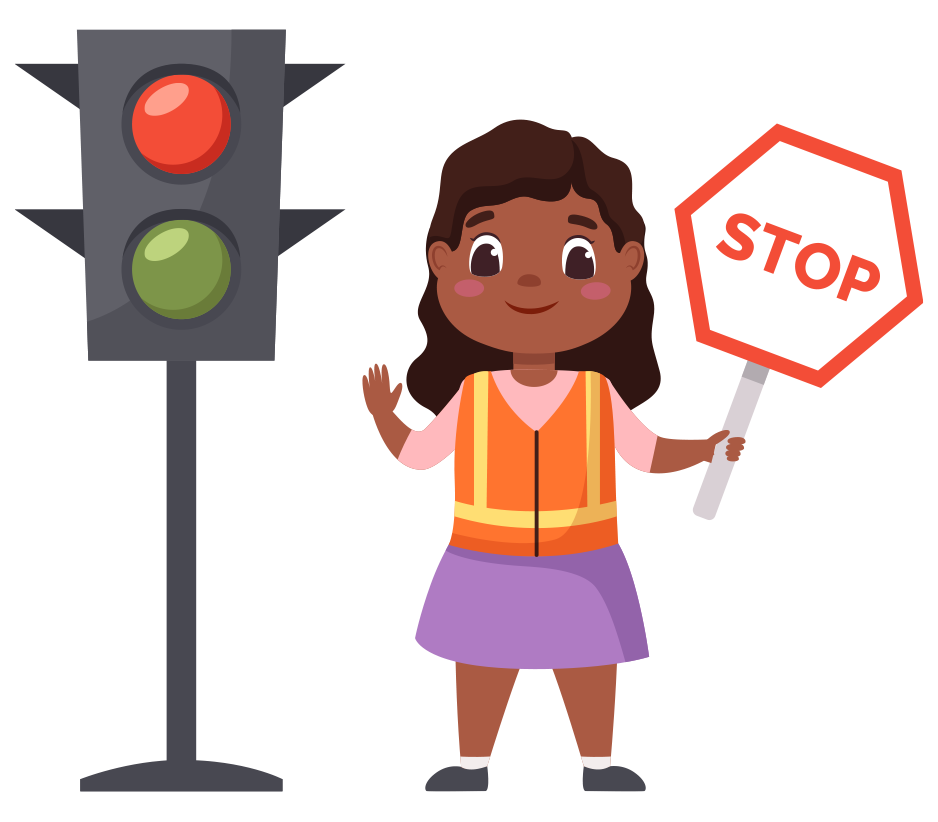
The school patrols comprise of Year 6 students with a supervising adult. The school patrols will be trained yearly by a Police Education Officer. A student must have written permission from their parent/caregiver prior to joining the school patrol team
School patrols operate once daily during school terms, from 7.55 am to 8.15 am.
Recording illegal or dangerous driving behaviour is noted by the adult supervisor at the crossing. Cycle and pedestrian complaints are also recorded in a notebook monitored by the D.P. and parents are notified where necessary.
Picking up Children by Car
We ask parents to leave their vehicles and collect their children from the path alongside the swimming pool, where they will be brought out by their teacher. On wet days, children will be waiting under the covered quad between the blocks of classrooms. We do not want unaccompanied children to cross the car park area or the road.
Cars to enter the court carpark from the swimming pool end and angle park when dropping children off. Students should alight and enter a vehicle from the footpath side door when stopping on the side of the road. Students, parents/caregivers must use the pedestrian crossing/road patrols if they need to cross the road. Students are not allowed to walk through the carpark
The carpark is for the sole use of members of staff and official school visitors
Parents/caregivers must not park and wait for students on any yellow line or within 5 metres of the crossing patrol site.


Taking Children from School Early
If there are exceptional circumstances and parents wish to take their child / children from school early, this must be done through the office. Please sign the child out before collecting them from the classroom. Please do not take your child / children out of school without going through this procedure as you will cause staff a lot of concern over the whereabouts of your child.
Digital Safety in School
We belong to N4L – Network for Learning, an MOE filter for online content that provides a level of protection against accidental harm – not 100% perfect, but very efficient.
All the issues we’ve had have been children deliberately looking up inappropriate content, which is brought to our attention by N4L alerts.

Medical & Wellbeing

Health Nurse
The public health nurse is a regular visitor to the school. Children can be seen following a referral by staff or families.
Existing Medical Conditions
We welcome all students to our school. If your child needs learning support or has an existing medical condition that we need to be aware of, please let us know so we can work together to ensure the best possible care for your child.


Infectious Diseases
To stop sickness from spreading, it is important for you to keep your child at home when they are ill, and not let them go to school or preschool. How long they should be home depends on what sickness they have. We follow Ministry of Education guidelines for further information: Click Here
Dental Van
The dental van comes to our school periodically and parks just outside the school assembly hall, it tends to stay for a few months at a time and you are welcome to make dental appointments to get your child / children's teeth checked.
If the Dental Therapist is not on duty at our school she can be contacted and visited at other nearby schools.
Ring: 0800 698 3384 to find your nearest clinic
or for the mobile clinic: 09 437 3570


Medication at School
If a child requires medication at school for treatment of allergies or any other purpose, this should be made clear when the child is first enrolled. For safety reasons, we do not allow children to keep medication on their desks or in their school bags except under exceptional circumstances. Medication will be held at the office or kept in the medical room. If the office staff are asked to administer medication to students during the day, they will take all care to do so, but can accept no responsibility if, for whatever reason, they fail to do so.
A note signed by a parent/caregiver or a phone call is required to explain the times and dosage to be given.
Sickness or Accidents at School
If a child becomes ill or has an accident at school, a teacher or learning assistant will admit them to the sickbay and inform the Administration Officer or the Principal. Medical records will be checked in cases of allergic reactions or known medical conditions. If the problem is minor, the child will return to class or play after a time. If the injury or illness is more serious, the parents/caregivers will be contacted. If contact is not possible, the emergency contact(s) will be tried. Failing this, the child will remain in the sick bay with supervision as required by the office staff. Parent must sign children out of the office before taking them home.
No child will receive medication without the consent of a parent or caregiver. An exception to this would occur in a relatively serious case and where none of the contacts is available. Advice would be sought from a medical professional, the family G.P. if possible. In some cases (if no contact person is available) the child may be taken directly to the doctor by school staff or an ambulance called.
Details will be recorded in the sick bay record book. In the case of injuries caused by an accident, the staff member who attends the accident will complete an injury report form. The report will contain recommended action to prevent a repetition of the accident. This may involve such action as physical alterations to property or equipment, student training etc. The report is to be given to the Principal. An accident report summary will be presented to the Board once a year.
All full time staff hold current first aid certificates.
Head Lice
If there are signs of head lice or nits at the school, a note will be sent home and any child showing signs must be treated before returning to school.
-
While there is a headlice problem, check the hair of the whole family every day.
-
When the problem has cleared, check once a week.
-
Brush hair daily, thoroughly. Brushing can kill or injure lice and stop them laying eggs. Pay particular attention to the areas behind the ears and the back of the neck. Daily thorough hair brushing is a very effective preventative measure.
-
Lice do not lay eggs on bed linen and do not survive for long off the human head, but it may be a good idea to wash bed linen and vacuum carpets, chairs etc to remove any hairs with eggs on them before they hatch.
-
Headlice shampoo treatment should be repeated after a number of days. Check the instructions on the packet.
-
Discourage your children from sharing their hats, hair ties, brushes etc.
-
2 in 1 shampoo/conditioner stops lice shampoo from working properly. You will need to use a special stripping shampoo (available from the chemist) before you use lice shampoo.
3 Way Conferences
3 Way Conferences take place in term 2 and are booked online; a link will be sent home through our school newsletter and Facebook page. The focus of the conference is a conversation about learning and setting goals. Both the learner and their family have input into learning goals. A written report is sent home shortly after the conference, summarising the conversation and confirming the goals.
3 Way Conferences are a really important part of our reporting process and we encourage all of our whanau to make an appointment. As we place our learners at the centre of the conversation, it is essential that every child attends with their parents/whanau/caregiver. Children need to be actively involved in goal setting and understand where they are at in their learning and their next steps.
Communication
Ongoing, clear communication between home and school is vital for the well-being and progress of each child. Parents/Caregivers/Whanau are encouraged to make contact with staff throughout the year at appropriate times. Please make an appointment with your child’s teacher outside of school hours.
A newsletter is sent by email every second Thursday. Our newsletter provides important school notices, dates for coming events and occasionally forms to be returned. A copy of the newsletter is available on our website. If you would prefer to receive a hard copy, please let the office know. If it is necessary for us to send out other notices (e.g. for class camps), we make every effort to send these out only on Thursdays with the newsletter.
We also use emails, text messaging, Seesaw for Schools and our school Facebook page to keep you updated in between newsletters.
(See also Reports and Interviews)
Concerns or Queries
If parents or caregivers have any concerns or queries, we genuinely wish to hear them. Contact the relevant staff member at school outside teaching hours, or, if you prefer, send us a note or make a phone call.
-
Procedures will follow the guidelines agreed to in the school's Complaints Policy.
-
At One Tree Point School we believe in talking directly to the person that can solve the problem. This means that in most cases, initial contact is an appointment with your child’s Teacher.
-
If there is no resolution, or the concern needs further support, then an appointment with the Team Leader will be made.
-
After this point, you may need to make an appointment with a Deputy Principal
-
If the matter remains unresolved or if any further action is required, they may refer you to the Principal, depending on the action required
-
Formal complaints must be written.
Reporting & Assessment
Our reporting processes are as follows:
Term 1:
Seesaw portfolio, which will include progress against the New Zealand Curriculum in reading, writing, maths, progress against student goals, and an example of discovery learning (depending on the curriculum focus for the term, science, technology, Health, Social Studies).
Term 2:
3 Way Conferences followed by a written summary of achievement in relation to the New Zealand Curriculum, together with student goals.
Seesaw portfolio, which will include progress against the New Zealand Curriculum in reading, writing, maths, progress against student goals, and an example of discovery learning (depending on the curriculum focus for the term, science, technology, Health, Social Studies).
Term 3:
Regular updates on classroom learning through Seesaw for Schools (depending on the curriculum focus for the term, science, technology, Health, Social Studies).
Term 4:
End of year summary report.
E-Learning and Digital Citizenship
At One Tree Point School, we support students to become responsible and safe users of digital technologies and the internet. It is also important that our students learn how to interact and participate in a digitally literate society.
We think a good digital citizen is someone who:
-
Is a confident and capable user of digital technology
-
will use digital technologies for learning and participating in a range of activities
-
will think carefully about whether the information they see online is true
-
will be able to speak the language of digital technologies
-
will always use digital technologies to communicate with others in positive ways
-
understands that they may experience problems when using digital technology, but can deal with them
-
will be honest and fair in all of their actions using digital technology
-
will always respect people’s privacy and freedom of speech online
-
will help others to become better digital citizens
Please check the resources below:
> Digital Citizenship Powerpoint for Parents.
> Information from Netsafe New Zealand
All students will have daily access to digital tools and the internet to support their learning. On enrolment students and parents are to sign the Internet Permission Form and have the signed permission of a parent/caregiver before using the Internet at school. This document is kept on file upon enrolment. Refer to details in cyber safety agreement.
Learning Support

Students with Additional Needs
We support our learners with their academic, social and emotional needs through a range of programmes. If you think your child needs additional support, please contact the principal (principal@otp.school.nz) and/or Gemma Bradburn (gbradburn@otp.school.nz), our Learning Support Coordinator.
Bream Bay Angels
The ‘Bream Bay Angels' are a group of volunteers who come into schools and provide extra reading support for some of our children. Each Bream Bay Angel is provided with support, resources and some training. If you know of anyone who has some time to spend reading with children please contact our office.

Relational Approaches to Behaviour
As a trauma-informed school, we focus on connection before correction, using strategies to help children manage emotions, build strong relationships, and make positive choices.
Please follow the button below to see our behaviour processes in more detail:
Our Behaviour Plan
- We build strong RELATIONSHIPS to create 'TRUST & FEEL SAFETY'
- We use CURIOSITY to try and understand behaviour; we WONDER together...
- We CONNECT before we correct.
- We START FRESH EACH DAY, helping students to learn that relationships are stronger than behaviour.
- We implement BOUNDARIES and school processes with COMPASSION and UNDERSTANDING.
- We TRUST THE PROCESS, growing brains with AROHA.
- We know CO-REGULATION leads to self-regulation.
- We support each other as a TEAM.

Seesaw Portfolio
At One Tree Point School, we are committed to involving families/whanau in their child’s learning journey. Seesaw for Schools is an online tool that enables on-going communication between home and school together with providing parents with up to date information about progress and achievement.
We’re really excited that Seesaw for School enables families/whanau to have a real-time view into their child’s world and learning at school together with the opportunity to comment and give feedback.
When you enrol your child at school, you will be asked to download the Seesaw app. We will give you a barcode to scan and you have the choice to share this with other members of your family. The cost of providing Seesaw licences is $8.00 per year per student, which can be paid through Baigents Office Products www.nzschoolshop.co.nz with the stationery order or directly to the school office.

School Bus
Criteria for Transport Assistance
Those entitled to school transport assistance are students under 10 who live more than 3.2 kilometres from the nearest school, and students 10 and over who live more than 4.8 kilometres from the nearest school where no suitable public passenger services are available. Ineligible students are required to make their own way, or be taken by parents, up to 1.6 kilometres to a school bus service.
If a student meets the eligibility criteria for distance from the nearest school, he or she will have an entitlement to assistance even if they do not attend the nearest school.
Transport assistance does not necessarily mean the use of a school bus service. The different forms of transport assistance available are:
- the school bus service
- private conveyance allowance
- public transport allowance
- taxi service for special education students
School transports network may allow ineligible students to travel on the bus as long as eligible students are not disadvantaged. School bus operators may charge ineligible students a fare. Students are not eligible to catch a bus from where the bus stop is over the halfway point between schools. They must find their own way to the halfway point.
Safe Use of Buses
-
Students must always get on or off the bus through the passenger door on the left side of the bus. They must never use the door on the right hand side of the bus (the emergency exit) unless there is an emergency.
-
Students must not get on or off a bus when it is moving.
-
After getting off a bus, students must wait on the side of the road until the bus has moved at least two power poles away, so that they have a clear view of the road before crossing.
-
Students must keep well clear of the bus while it is being turned or reversed. A driver reversing a bus in an area close to students must post a teacher or senior student to keep children away from the reversing bus. The driver must signal when it is safe to board the bus.
-
Bus monitors should be instructed to keep the children in a safe place while they wait to board the bus. Whenever possible, students should get on the bus before it has turned or reversed, or get off after it has turned or reversed.
-
If there is a breakdown that requires students to leave the bus (e.g., a flat tyre), they must stand clear of the bus and off the road.
-
Except in an emergency or breakdown, students must not leave the bus between their normal pick up or drop off point and the school. The school must provide permission in advance if students are to get off at any other point.
How parents/caregivers can assist with safety:
- Go with the children to the bus stop; student safety and welfare is the responsibility of parents before the bus arrives.
- When collecting children from the bus stop by car, get out of the car and meet them as they get off the bus, on the same side of the road that the bus has stopped and go with them to the car.
- Young children are not capable of judging traffic speed and distance accurately. They should always be supervised, by a parent or caregiver, when crossing the road to or from the bus stop.
To promote bus safety children and parents are expected to sign a yearly bus contract.
Bus Routes
The Bream Bay Easy Bus covers the One Tree Point School routes. Please check their website by clicking the button below.
Bus Complaints
Bus complaints follow a strict procedure –the driver fills out a form (Bream Bay Bus Network Schools comply) and the school follows up complaints and will notify parents.
Our School Pool
Our pool is open for school use for the whole of term 1.
Swimming is a compulsory part of our physical Education programme and children are expected to bring togs and a towel (named please) every day during these months. If parents wish their children to be excused from swimming due to sickness, a note is required.
We aim to teach each student the fundamentals and safety of being in the water to develop confidence. We do recommend you enrol your child into swimming lessons to develop their swimming skills.
All children must wear swimming caps when swimming. These can be purchased along with their stationery pack at school at the cost of $3.50.
Please note: Our school pool is only open to school students and not the local community.
Library & Book Club

How the library works
We have a beautiful Library with many books, seating areas and games for the children to utilise. Every week each class gets the option to visit the library where each child may choose 3 books to borrow for up to 21 days. Books taken home must be transported in a book bag for protection.
Lost or Damaged Books
If a school book such as a library book or home reader is lost or damaged, the school will expect the family to pay for the replacement.
Ashton Scholastic Book Club
Students are given the opportunity to purchase books from Ashton's Lucky & Arrow Book Clubs. A book club magazine will be given to each student each term. These can be ordered online or through the order forms attached to the back of the book club magazine.
To order online, please click here. All payments are made via card or bank transfer when ordering online. Items ordered will be delivered to the school when ready.
When ordering through the magazine, please place the order forms with the required money in a named, sealed envelope. Payment can also be made by credit card by filling in the details at the bottom of the order sheet. Envelopes are to be put in the box on the office counter.
